
If you run a treatment center, you have probably been pitched all three acronyms this year, usually by someone implying that the one you are paying for is already obsolete. It is not. SEO, AEO and GEO are three views of the same job: being the source that shows up when a family asks for help. This guide explains what each one means, how they differ, what the research says actually works, and what to do about it this quarter.
SEO vs. GEO vs. AEO: the short answer
SEO (search engine optimization) earns your pages a place in a search engine’s results. AEO (answer engine optimization) earns you the direct answer: the featured snippet, the voice assistant’s reply, the summary box above the links. GEO (generative engine optimization) earns you a mention or citation when an AI assistant such as ChatGPT, Claude or Gemini writes the answer itself.
| SEO | AEO | GEO | |
|---|---|---|---|
| Stands for | Search engine optimization | Answer engine optimization | Generative engine optimization |
| Where you show up | The ranked list of links | Featured snippets, “People also ask”, voice replies, summary boxes | Inside the written answers of ChatGPT, Claude, Gemini, Perplexity and Google’s AI Overviews |
| What the searcher types | Keywords: “rehab near me” | A full question: “how long does detox take?” | A situation: “my best friend needs help, who can I call?” |
| What earns it | Helpful pages, sound site structure, reputation and links | A direct, well-structured answer to a specific question | Being a named, credible source worth citing |
| How you measure it | Rankings, organic traffic, calls and admits from organic | Snippet and answer-box wins, question rankings | Mentions and citations in AI answers, referral traffic from assistants |
They overlap far more than they differ. When I asked Megan Pitcher, our Chief Marketing Officer, how she separates them for clients, she didn’t:
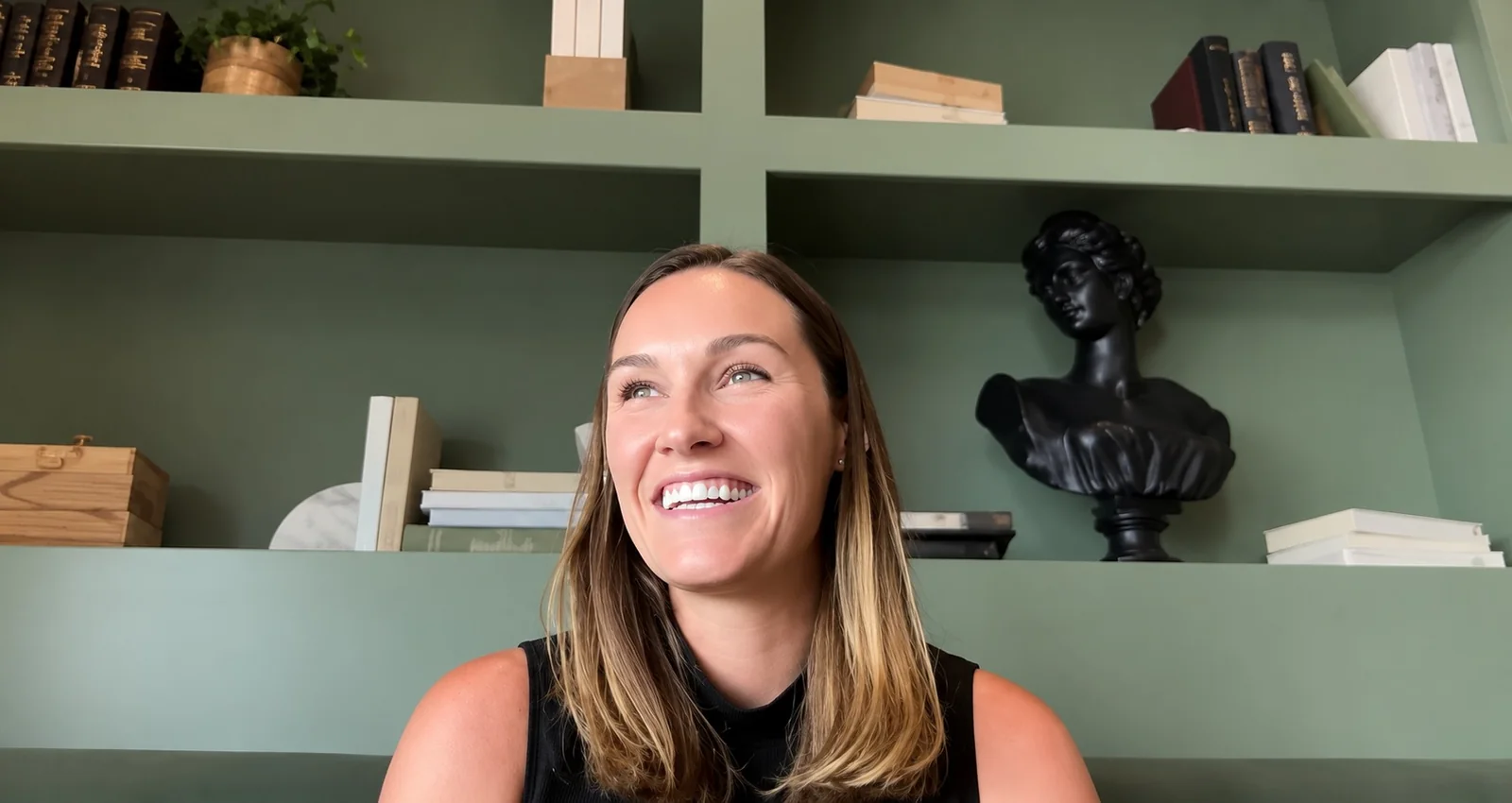
“In my opinion, good SEO is both. Good SEO is not just appealing to Google and showing up in Google, but it’s holistic, and we’re appealing to people searching for those query-based searches, wherever that might be.”
What is SEO?
- The work of earning a place in a search engine’s unpaid results.
- The pages, site structure and reputation (reviews, links, mentions) that tell a search engine a site answers the question and can be trusted.
For a treatment center that means service and level-of-care pages, location pages, a Google Business Profile, and content that answers the questions admissions hears every week.
SEO is also still where most of the demand is. Megan’s read of what we see across accounts: “We’re still seeing like 90% or so of those searches on Google.” That is her observation, not a study.
What is AEO?
- Structuring content so it can be shown as the direct answer to a question.
- Winning the featured snippet, the “People also ask” box, the voice assistant’s reply or the summary above the links.
Search engines have been doing this for years with featured snippets and “People also ask”. The craft is simple to describe: put the question in a heading, answer it in the first sentence or two, then add the detail. FAQ sections, clear definitions and step lists all help, and so does schema markup that tells the engine which text is the question and which is the answer.
What is GEO?
- Earning a mention or a citation when an AI system writes the answer instead of listing links.
- Making content specific, sourced and attributable enough that ChatGPT, Claude, Gemini or Google’s AI Overviews choose it as a source.
GEO is the newest of the three. The term comes from a 2024 study by researchers at Princeton and IIT Delhi, who tested which changes to a page made it more visible in AI-generated answers.
The same study found that keyword stuffing, the oldest trick in SEO, offered “little to no improvement” in AI answers. In other words, the machines reward the same thing a worried parent does: a specific, sourced answer from someone who sounds like they know.
What has changed: from keywords to questions
The way people ask has changed more than the way engines rank. Megan’s description of the shift:
“In the past, SEO used to be showing up for a keyword, and now you want to show up for questions, or show up in answer engine optimization results. It’s more query based versus keyword stuffing.”
 Megan PitcherChief Marketing Officer, Oluna
Her example is the one that matters for families. Instead of searching “rehab near me,” someone might type, “My best friend needs help. Who can help me with their mental health?” That is a conversation, not a keyword, and more of those conversations now happen with an AI assistant or end on the results page itself.
Source: KFF Tracking Poll on Health Information and Trust, March 2026 · SparkToro, June 2026

What it means for your program: the question your next family types is longer, more personal, and more likely to be answered before they ever reach a website. The content that gets quoted in that answer is content that answers the question directly.
Do you need a separate strategy for AI search?
No, and Google says so directly. Its guidance for site owners states that there are “no additional requirements to appear in AI Overviews or AI Mode, nor other special optimizations necessary.” A page has to be indexed and eligible to appear in Search, and it has to be helpful. You do not need new AI text files or special markup.
What changes is emphasis. The pages that win in AI answers are the ones a careful human editor would also pick: specific, sourced, written by someone accountable. Megan’s version:
“The biggest piece overarching is just building authority. Leveraging expert insights instead of just keyword-stuffed content.”
Megan PitcherChief Marketing Officer, OlunaA named clinician explaining how your program handles detox, family involvement or insurance is citable. A generic 600-word article is not.
Our Chief Technology Officer Adam Scheid, who builds the technical side of this for clients, frames every channel the same way:
“All digital marketing at its core is database building. Marketing that cannot be discovered is wasted effort… in all marketing you not only need to think about how it will be consumed by the user, but also how you are coordinating your assets in order to build your database of assets to be more discoverable by all the algorithms.”
 Adam ScheidChief Technology Officer, Oluna

How long does SEO take? The green banana rule
Longer than ads, and that is the point of running both. Megan’s analogy is the one our clients remember:
“Paid ads is the instant gratification. You place an ad, you’re in the top three results on Google. And then SEO… I like to use a green banana analogy, where what you do today might rank in three to six months.”
Megan PitcherChief Marketing Officer, OlunaAdmits from paid ads
start in month one and edge up slowly as campaigns are tuned, for as long as you keep paying
Admits from SEO
slow at first, then it ripens: what you do today might rank in three to six months
| Channel | Time to results | What it costs you | Best for |
|---|---|---|---|
| Paid search | Days | Every click, for as long as you run it | Beds that need filling this quarter |
| SEO, AEO, GEO | Three to six months to rank; compounding after | Time and expertise up front | Visibility you own, and a lower blended cost per admit |
What it means for your program: plan for both. Ads cover today’s census while the organic work ripens; then the organic work lowers what you have to spend on ads.
Why 100 AI blog posts a month is not SEO
The cheapest pitch in our industry right now is volume: an agency promises a hundred AI-written posts a month and calls it SEO. The GEO research above is one reason that fails. Megan is blunter about it:
“We’re not just putting out a bunch of AI slop… we’re not just pushing out a hundred keyword-stuffed AI blog posts a month and calling it SEO.”
Megan PitcherChief Marketing Officer, OlunaOften the most valuable work is not a new post at all. In her words, “SEO might mean changing your homepage content and making website edits, versus just publishing blog posts.” If your service pages don’t say which levels of care you offer, which insurance you take, and who is on the clinical team, no amount of blogging will fix that.

How to show up in AI answers: six steps, and the evidence for each
There is no secret handshake. Every step below comes from what the platforms themselves publish or from controlled research, and we say which.
- Make sure the engines can read you. Google’s own guidance for its AI features starts with the basics: crawling allowed, important content “available in textual form,” pages easy to find through internal links. For ChatGPT, OpenAI recommends allowing its search crawler, OAI-SearchBot, in your robots.txt. Evidence: Google Search Central; OpenAI.
- Answer real questions directly. Put the question in the heading and the answer in the first sentence or two, then add the detail. That is how featured snippets have always been chosen, and it is the text an AI answer lifts. Evidence: Google’s guidance that AI features draw on the same indexed, snippet-eligible pages as Search.
- Add quotations, statistics and cited sources. In the 2024 GEO study these three changes produced the largest gains in AI-answer visibility, up to 40%, while keyword stuffing scored below the unedited baseline. Evidence: Aggarwal et al. (2024).
- Put a named, accountable expert on the page. Google’s people-first content guidance asks whether it is “self-evident to your visitors who authored your content,” and says its systems give more weight to strong experience, expertise and trust signals on topics that affect people’s health. Interview your own clinicians; their words are also the quotations step 3 calls for. Evidence: Google Search Central.
- Keep your facts identical everywhere. Google asks that structured data match the visible text and that your Business Profile be up to date. Levels of care, insurance accepted, locations and hours should read the same on your site, your profile and your directory listings. Evidence: Google Search Central.
- Measure what matters. Track rankings and AI mentions, but judge the work on calls, forms and admits by source. This one is our own practice, not a study.

SEO, AEO and GEO for treatment centers: what is different
Behavioral health adds constraints a general guide skips. Addiction treatment advertisers need LegitScript certification to run ads on Google and the other major platforms, which makes organic visibility more valuable, not less. The searcher is often a family member in a crisis, so answers have to be calm, specific and fast to find. And trust signals carry more weight than in almost any other category: reviews, clinical credentials and accreditation are part of the answer, not decoration around it.
Megan also thinks part of an agency’s job is translation: “There’s so many layers to even just each of those topics… they’re so technical that I think our job as a marketing agency is to kind of translate that into a digestible format.” If a vendor can’t explain what they are doing for your program in one paragraph, that is a finding.
Frequently asked questions
How Oluna helps. Oluna is a behavioral health marketing agency built for treatment centers, autism services and mental-health providers. Our SEO and AI search work starts with your own experts, because that is what ranks and what gets cited, and every channel is tracked through to admits. Want to know where your program shows up today, on Google and in AI answers? Schedule a strategy call.
References
- Aggarwal, P., Murahari, V., Rajpurohit, T., Kalyan, A., Narasimhan, K., & Deshpande, A. (2024). GEO: Generative engine optimization. In Proceedings of the 30th ACM SIGKDD Conference on Knowledge Discovery and Data Mining. https://arxiv.org/abs/2311.09735
- Fishkin, R. (2026, June 9). In 2026, less than one third of Google searches still send a click. SparkToro. https://sparktoro.com/blog/in-2026-less-than-one-third-of-google-searches-still-send-a-click/
- Google. (n.d.). AI features and your website. Google Search Central. Retrieved September 20, 2026, from https://developers.google.com/search/docs/appearance/ai-features
- Google. (n.d.). Creating helpful, reliable, people-first content. Google Search Central. Retrieved September 20, 2026, from https://developers.google.com/search/docs/fundamentals/creating-helpful-content
- KFF. (2026, March 25). KFF tracking poll on health information and trust: AI chatbots for health information. https://www.kff.org/health-information-trust/poll-1-in-3-adults-are-turning-to-ai-chatbots-for-health-information-equaling-the-share-who-use-social-media-for-health/
- OpenAI. (n.d.). Overview of OpenAI crawlers. Retrieved September 20, 2026, from https://developers.openai.com/api/docs/bots
- Pitcher, M. (2026, September 15). Interview with A. Vere Nicoll on SEO, AEO and GEO [Recorded interview]. Oluna.